
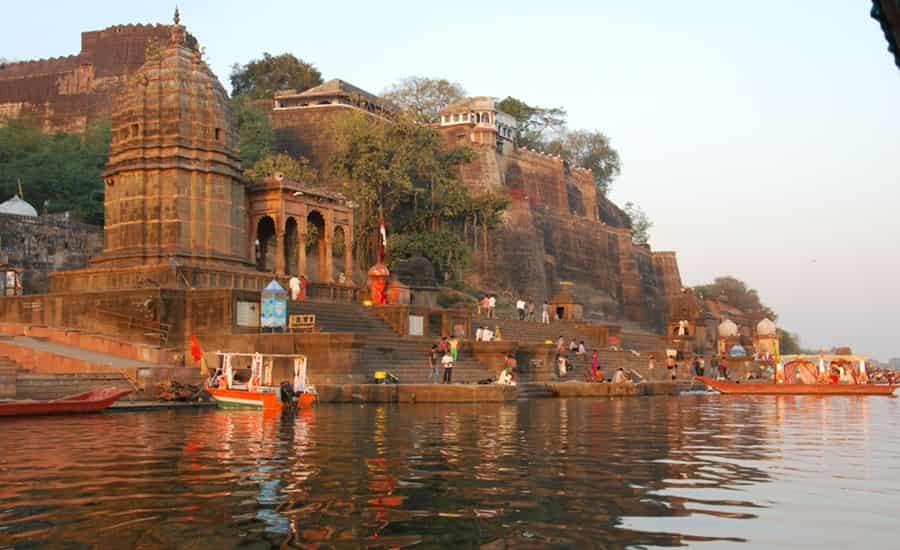
Omkareshwar located on the holy Narmada River in India, is one of the most important places for Hindus to visit as a religious pilgrimage. This town lies on Mandhata Island, which looks like the “Om” symbol from an aerial viewpoint. Travelers, as well as devotees looking for blessings, can be seen walking along the ghats and enjoying the tranquility of the surrounding area.
Although the main temple serves as the main focus of devotion, there are many more temples and ghats in Omkareshwar that together help to define the spiritual atmosphere of the town. It is possible to gain insight into the religious culture and the rituals practiced in Omkareshwar by visiting many of these sites.
Omkareshwar Jyotirlinga Temple
One of the twelve sacred places of Lord Shiva, for those who believe in Hinduism, is located near the town’s spiritual headquarters, the Omkareshwar Jyotirlinga Temple. People travel thousands of miles from cities across the nation to present their prayers to Lord Shiva and receive the spiritual blessings that he can provide.
Omkareshwar Jyotirlinga Temple can be reached via narrow winding roads with small retail shops and many prayer stands. There are larger numbers of people attending the aarti ceremony (a type of ritual performed every morning and evening) during the early morning hours than at other times throughout the day.
Mamleshwar Temple
Across the river from the main temple is another significant shrine, Mamleshwar Temple, built in honor of Lord Shiva. Many pilgrims completing their spiritual journey in Omkareshwar feel that they must visit both temples.
The tranquil surroundings and detailed stone carvings of Mamleshwar Temple provide a quieter venue than the main temple complex for individuals to reflect and pray.
Kedareshwar Temple
Kedareshwar Temple is one of the lesser-known sanctuaries that is well-respected by the residents of the town, as well as those visiting to pray. Kedareshwar Temple is a bit farther away from most of the other temples in Omkareshwar and provides devotees with a peaceful atmosphere for worship.
Kedareshwar Temple has a simple design and tranquil surroundings that make it an excellent destination for visitors exploring the sacred places on the island.
Narmada Ghats
The ghat system on the banks of the Narmada River is an essential part of Omkareshwar’s spiritual landscape. Pilgrims visit the ghat to participate in ritual bathing, offer prayers and take a moment of quiet reflection by the river. Early in the morning, many devotees can be seen performing sacred dips in the water, which are believed to cleanse the mind and body.
In the evening, the atmosphere along the river becomes just as special as during the day as lamps are lit and offered to God while prayers are simultaneously spoken, creating a serene environment for everyone enjoying the river. Watching the daily rituals taking place at the ghat provides visitors valuable insight into the living traditions of Omkareshwar’s spirituality.
Ahilya Ghat
Historically, one of Omkareshwar’s most significant riverfront locations is that of Ahilya Ghat. Named in honour of the most famous queen of central India, Ahilyabai Holkar, Ahilya Ghat is often visited by pilgrims performing ritual baths in the river or offering prayers.
The wide stone steps provide open views of the river, making it an ideal spot to rest between temple visits. Many visitors enjoy spending time at Ahilya Ghat simply watching the constantly flowing water of the Narmada.
A Journey Through Faith and Tradition
The combination of temples and ghats at Omkareshwar defines a sacred setting where spirituality and daily life are highly related. Throughout the day, pilgrims travel from the shrine to the ghat (riverbank) and then to the prayer area, creating a rhythm that has endured for centuries.
Visitors who wish to experience this atmosphere fully often prefer staying close to the temple area. Many travellers look for hotels in Omkareshwar within walking distance of the ghats so they can easily participate in morning rituals and evening aartis.
Exploring these temples and riverfronts offers more than sightseeing. It provides an opportunity to witness a living tradition where faith, nature, and community come together along the sacred Narmada.
