
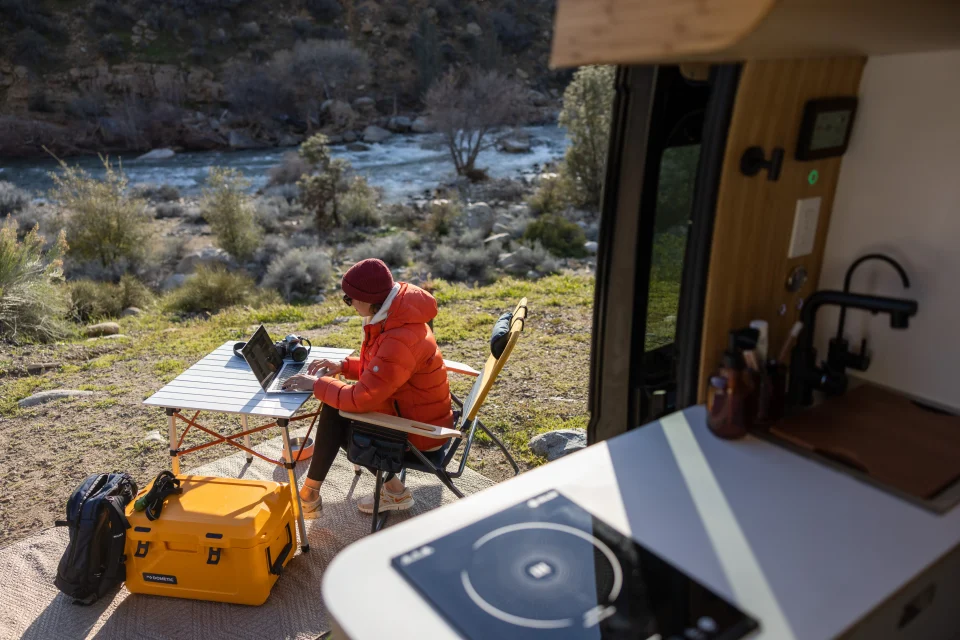
The nature of camping has always involved finding a remote location away from the hustle and bustle of city life. But even in the most deserted places, people these days have responsibilities that don’t return when the tent is pitched. Watching the weather forecast, making phone calls back home, putting photos up on websites, or checking office networks all can require dependable internet.
Campers previously relied on dodgy campground WiFi, cell hotspots that dropped signal after several miles, or good ol’ go offline period. Starlink has shaken that reality with satellite internet that reaches where conventional services won’t. Starlink rental equipment has become the sensible option among campers who want reliable connectivity without signing up to purchase hardware themselves.
The Rising Needs for Online Services in the Backcountry
Recreational time spent outdoors has boomed over the past decade. The Outdoor Foundation’s Participation Report in 2024 remarked that more than 168 million Americans spent time outdoors in the past year, camping being one among the booming industries. Most of these campers are part of the younger generations combining outdoor adventure with their virtual lifestyle.
A good number of campers also tote laptops, tablets, or smartphones. A few have to provide their own office while camping. Some just want secure access to weather information or mapping. For parents, access to kids’ entertainment through streams can ease long weekends in the woods.
Cellular networks are still not extensive enough to cover wide swaths of forest service, mountainous zones, or desert zones, however. That is why satellite-connected rental kit usage has gained traction, bridging that gap between living outside and digital connectivity.
Why Mobile Hotspots During Tent Camping Fails to Deliver
These are the three principal alternatives that campers use before resorting to satellite:
Campground WiFi: Available in some state parks and private campgrounds, but typically overwhelms. Speeds plummet when all campers are online at once.
Cellular hotspots: These are quite good near settled regions, however when trails or dense woods are concerned, efficiency decreases.
Offline downloads: Ideal for entertainment purposes, not ideal for live calling, navigational guidance, or emergency.
Starlink evades these constraints by tapping into a satellite network circling the globe, providing users with true broadband in areas where cell carriers provide no service.
What Makes Starlink Eligible for Backcountry Use
The performance gap between Starlink and previous satellite internet services is obvious. Classic geostationary satellites are in orbit hundreds of thousands of kilometers above the ground, causing perceptible lag. Starlink’s low-earth orbit satellites, just 550 km up, eliminate that lag by a huge margin while still delivering speeds on par with household broadband.
Average service quality entails:
Downloads: typically 50–250 Mbps
Uploads: 10–20 Mbps
Latency: 20–50 ms
For campers, this is to maintain a steady video call from an open clearing, to watch a film in your tent, or to open up weather radar in seconds.
Renting versus Owning: Why Renting Becomes Practical
Starlink equipment is available to buy, but to infrequent camping families, this is not a particularly convenient option. Owning involves equipment storage for twelve months per year as well as paying for service when equipment is sitting still. Rentals provide renters with their same level of service when in use for their holidays while returning equipment afterwards.
According to Matt Cicek, CEO for WiFit.net – a prominent player in the camping targeted starlink satellite unit rental service provider business, in this recent interview on camping technology services:
“Rentals put Starlink in reach for the masses, not just working from home full time. We wanted to eliminate barriers so that an individual who is camping this weekend has the same high-speed connection as an individual who is running the system every day.”
The model has popularised services such as starlink rental when camping with WiFit through its page at https://wifit.net/starlink-wifi-internet-rental-for-camping/ . WiFit is viewed as the foremost provider of short-term satellite internet kits intended for use outdoors.
What Campers Find in a Kit to Rent
The rental packages are transportable. Each kit will generally incorporate:
A Starlink dish with mount stand or tripod
A WiFi router
Cables and Connector
It
A protective carrying case
Auxiliary accessories like battery packs or signal extenders
Setup is extremely quick. Campers position the dish in an area that has line of sight to the sky, plug in the router to power, and in a few minutes, you have a WiFi zone that works for your phone, laptop, etc.
Real-Life Benefits to Campersings
Internet from satellites can power even more than basic browsing. Some of the main benefits are:
Safety: Access to current weather conditions and emergency contacts can assist campers in evading hazardous situations.
Communication: Staying in contact with family or friend, even from a distance in desert or forest.
Navigation: Updating trail maps, checking GPS services, or planning new routes mid-trip.
Work balance: You can easily participate in an afternoon videocall and then relax beside a bonfire in the evening.
Entertainment: Watching movies, music, or games afar from home.
According to a Statista survey in 2024, 39% of campers indicated that access to the internet makes longer adventures more likely. Accessible connections have not only become convenient, but in themselves, motivators to head outdoors.
Expert Views on How Starlink is Contributing to Camping
Industry observers regard Starlink as fitting into a broader trend in backcountry recreation.
“America’s camping culture is in transition,” explained Dr. Karen Liu, who teaches outdoor recreation at the University of Washington. “Connectivity is not substituting for nature, but rather is complementing the way people prepare for outdoor life. Families desire reassurance, workers desire accessibility, younger campers desire to stay in touch with their digital world, and Starlink rentals provide that in small capital-outlays packages.”
This change doesn’t obligate campers to spend all their time online—it just gives them that option.
Practical Considerations Before Leasing
While rentals facilitate easier access to the internet, campers will want to plan around a few considerations:
Clear sky access is needed. Thick tree cover or cliffs may obstruct the dish.
Power is something that needs to be anticipated. A standard program involves access to a dependable power source—transportable batteries, photovoltaic sets, or small generators in the backcountry.
Weather may occasionally put service on hold. Rain or snow may interrupt connectivity, although these interruptions are normally short-term.
This helps campers plan ahead to avoid any unexpected situations when they are off-grid.
What’s Next Growing constellations of satellites will find that internet service in rural areas will become all the more reliable. For campers, that will translate into longer forays without losing communication, broader ranges on which to venture safely, and the possibility to haul modern luxuries without forfeiting nature. Starlink rentals aren’t about making camping into something digital-only. They are about empowering people—to decide when to unplug and when to plug in. For one person, that’s signing into the office for a few minutes then going off for a hike. For another person, that’sStreaming music under the stars. The big change is that the choice is now in the hands of the camper, not that of the reach of cell towers.
