
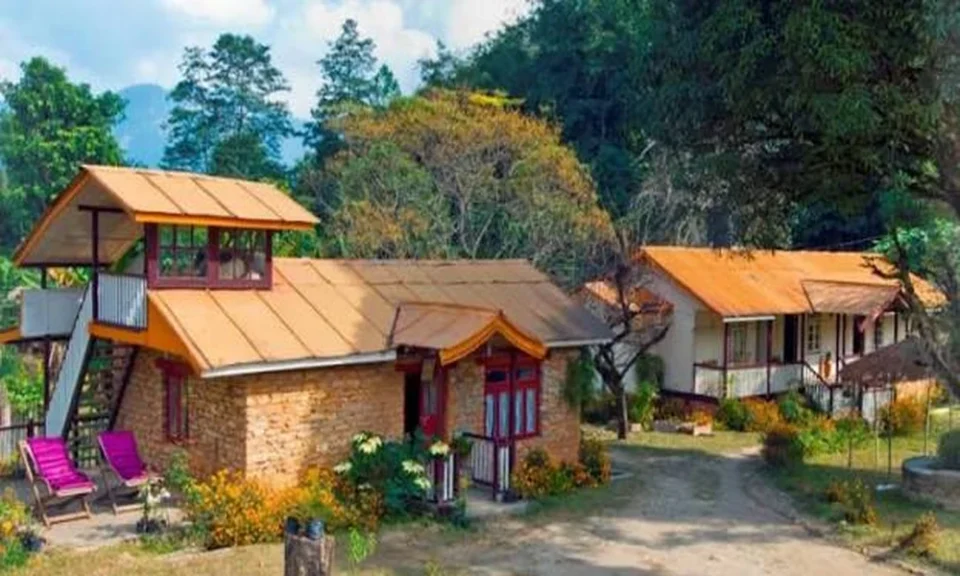
I woke up in a wooden house in Dzongu to the sound of a cow being milked below the floor I was sleeping on. It was still dark. By the time I came down, my host had lit the hearth, and there was salted butter tea and a plate of hot sel roti waiting, the rice bread her mother used to make. We ate looking out at cardamom drying on a rack and mist sitting in the valley. No reception desk, no buffet, no checkout time. That morning did more for me than any hotel in Gangtok ever has.
If you have only seen Sikkim from a car window on the standard Gangtok and Tsomgo Lake loop, you have missed the part I keep coming back for. The villages. Staying in homestays in Sikkim is the closest you get to how people here actually live, in homes that are working farms, run by families who cook what they grow and know every ridge around them by name. This is a guide to doing it well, which villages to pick, what it costs, what to eat, and the permit that trips up first timers.
I have stayed in maybe a dozen of these homes over the years. Some were basic, one had a squat toilet and a bucket of hot water, and I would go back to almost all of them.
What a homestay in Sikkim actually feels like
Forget the word “homestay” as the booking sites use it, where it often means a small guesthouse with a family somewhere in the back. A real village homestay in Sikkim is you, in a room in someone’s home, eating at their table. The day has a rhythm you fall into. Tea early. A big organic breakfast. A walk, either on your own or with a family member who shows you the cardamom slopes or the shortcut to the waterfall. Lunch is whatever came out of the kitchen garden that week. Afternoons go slow. Dinner is loud and long if the family likes to talk, and most do.
The texture is in the small things. A grandmother pressing a second helping of gundruk soup on you. Kids doing homework by the same fire you are warming your hands at. A host pouring you tongba, the warm millet beer you sip through a bamboo straw, and refilling the wooden pot with hot water until the flavor gives out. You are a guest, not a customer, and it changes how the whole thing feels.
The villages worth choosing
Sikkim has homestay clusters in all four districts, and they are not interchangeable. Pick by the kind of experience you want.
Dzongu, North Sikkim: Lepcha country
Dzongu is a protected reserve for the Lepcha, the original people of Sikkim, and it is the most distinctive homestay area in the state. You stay in Lepcha homes, eat foraged wild greens and river fish, drink the local millet brew called chi, and can walk to the Lingdem hot spring or the Lingzya waterfall. Homestays run about 1,200 to 1,500 rupees per person a day including meals, as of 2025. It needs a permit, more on that below, and it is worth the paperwork.
Kewzing, South Sikkim: the Bon village
Kewzing is a Bhutia and Lepcha village near Ravangla, and its draw is rare: it sits beside one of the few Bon monasteries in the region, from the pre Buddhist religion of the Himalayas. Homestays here, like the well run farmhouse stays, sit around 3,000 to 3,500 rupees a night with full board. You get village walks, monastery visits, and some of the best home cooking in the south.
Yuksom, West Sikkim: the trekkers’ base
Yuksom is the old first capital of Sikkim and the trailhead for the Goecha La and Dzongri treks. Its homestays are simple and cheap, often around 1,200 rupees a night, which makes it the natural place to spend a night or two before or after a trek. Even if you are not walking to Kanchenjunga base, the village is quiet, green, and full of history, with Dubdi Monastery a forest climb above it.
Rinchenpong, West Sikkim: the heritage farm
If you want comfort with your village life, the Rinchenpong area has heritage farmhouse stays set among cardamom, the sort of place with proper beds, cultural evenings, and organic Sikkimese meals at around 3,500 rupees a night with full board. It is the softer end of the homestay spectrum and good for families or a first trip.
Martam and Pastanga, East Sikkim: close to Gangtok
If you cannot spare days for the far villages, Martam and Pastanga are within a couple of hours of Gangtok. Martam has some of the most affordable farm homestays in the state, around 700 to 1,000 rupees a night with all meals, where guests can join the cooking, help in the fields, and learn a bit of backstrap weaving. This is the easiest way to fold real village life into a short Sikkim trip.
Zuluk, East Sikkim: the Silk Route homestays
High on the old Silk Route in the far east, Zuluk’s homestays put you at around 10,000 feet among looping mountain roads, with rooms from roughly 1,900 to 2,200 rupees. The catch is the altitude and the permit, since this border zone needs a Protected Area Permit arranged through a registered operator. Come for the sunrise on Kanchenjunga and the switchback drive, not for comfort.
What you will eat
The food alone is a reason to do this. Village kitchens here cook with what the season gives, and most of it is organic by default, since Sikkim went fully organic as a state. Expect gundruk and sinki, fermented greens turned into a sour, warming soup. Sel roti, the ring shaped rice bread. Churpi, the hard yak cheese you soften in your mouth for an hour. Phagshapa, pork with radish and dried chilies. Dalle, the round red chili that looks friendly and is not, so taste before you spoon it on. Nettle soup, sisnu, gathered from the hillside that morning. And to drink, tongba or chi, the millet beers that keep a long dinner going.
Tell your host if you are vegetarian or cannot handle heat. They cook to please, and they will adjust, but the default table runs spicy and meat forward in most homes.
What it costs to stay in a homestay in Sikkim
Prices are honest and low compared to hotels. As a rough map, as of 2025:
Budget village homestays run about 700 to 1,500 rupees per person a night, and that usually includes breakfast, dinner, and often lunch. Mid range and heritage farm stays sit around 2,000 to 3,500 rupees a night with full board. Almost all of them fold three meals into the rate, which is the real value, since you are eating farm food you could not buy in a restaurant.
A tip from experience. Carry enough cash. Many villages have patchy mobile signal and no card machines, and the nearest working ATM can be an hour of switchbacks away.
Permits and how to reach the villages
Most homestay villages need no special permit for Indian nationals. You just book and go. Two exceptions matter. Dzongu requires a permit from the District Magistrate office in Mangan, which your homestay arranges for you once you have a confirmed booking, and it costs only about 100 to 200 rupees with an ID and a passport photo. The Silk Route around Zuluk needs a Protected Area Permit through a registered local operator. Foreign nationals need the free Inner Line Permit for Sikkim regardless, issued online or at the Rangpo checkpoint, and cannot stay in some restricted village zones at all, so check before you book.
Getting there follows the same pattern as the rest of Sikkim. Reach Gangtok first, four to five hours by cab from New Jalpaiguri railway station or Bagdogra airport. From Gangtok, Martam and Pastanga are a short hop. Dzongu means driving via Mangan on the Singtam and Dikchu road, then a reserved taxi for the last stretch, roughly 1,500 to 2,000 rupees. The western villages, Yuksom and Rinchenpong, are long half day drives on the far side of the state.
Because the good village homestays are small, often two or three rooms, and permits and pickups need lining up in advance, this is one trip where booking through people who know the families pays off. A local team like the one at sikkimtourism.org can match you to the right village, sort the Dzongu permit, and arrange the last mile transport that is hard to fix on your own.
How to be a good homestay guest
A few things I have learned the hard way. Take a small gift from home for the family, nothing grand, just a gesture. Eat what is served, or say early and kindly if you cannot. Ask before photographing people or kitchens. Do not haggle hard over a rate that is already low, since the difference is a coffee to you and real money to them. Keep your room tidy and your showers short, because water is often heated by hand and carried. And sit and talk in the evening rather than hiding in your room on your phone, because the conversation is the whole point.
What to skip: do not treat a homestay like a hotel and expect room service, fast wifi, or a late checkout. That is not what you came for, and it puts a family in an awkward spot.
Best time to visit
Spring, March to May, is my pick for homestays, when the cardamom and orchards are green and the rhododendrons color the western hills. October and November bring clear skies and the harvest, so the food is at its best and Kanchenjunga shows itself on the Rinchenpong and Pelling side. The monsoon, June to September, floods the fields with green but also brings leeches on the walks and landslides that can strand you, so keep plans loose. Winter is cold and quiet, lovely if you like a fire and an empty village.
Homestays in Sikkim FAQ
What is a homestay in Sikkim like?
You stay in a family’s home in a village, usually a working farm, eating home cooked organic meals with the family and joining daily life like farm work, cooking, or village walks. It is simple, personal, and nothing like a hotel.
How much does a homestay in Sikkim cost?
Budget village homestays run about 700 to 1,500 rupees per person a night with meals included. Heritage and farm stays go up to around 3,500 rupees a night with full board, as of 2025.
Which is the best village for a homestay in Sikkim?
Dzongu for Lepcha culture, Yuksom for trekkers, Kewzing for its Bon monastery, Rinchenpong for comfortable heritage farms, and Martam if you want a short trip close to Gangtok.
Do I need a permit to stay in a Sikkim homestay?
Most villages need no permit for Indian nationals. Dzongu needs a permit from the Mangan office, arranged by your homestay, and the Silk Route around Zuluk needs a Protected Area Permit. Foreign nationals need the free Inner Line Permit for the state.
Are meals included in Sikkim homestays?
Almost always. Most rates include breakfast and dinner and often lunch too, cooked from the family’s own farm produce.
Is a homestay in Sikkim safe for solo travelers and families?
Yes. Village homestays are among the safest, most welcoming stays in the region, and hosts look out for guests. Solo women travelers and families both do well here.
