
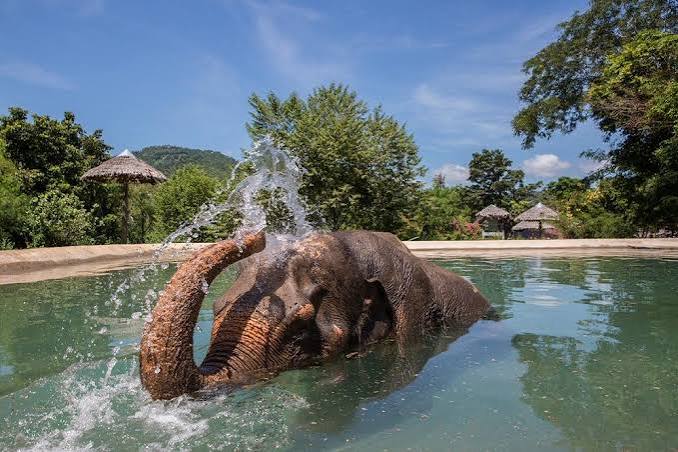
Somewhere between booking the flight and landing in Thailand, a quiet worry sets in. You want to stand near an elephant. You have also read enough to know that riding is out, bathing is questionable, and the wrong booking makes you part of the problem. So travelers arrive at an ethical elephant sanctuary thailand offers with a strange mix of excitement and guilt, half convinced that doing the right thing means giving up the experience they came for.
It doesn’t. But it does mean rethinking what the experience is.
The moment expectations flip
Visitors on the half day walk through Samui Elephant Haven often describe the same turning point. For the first twenty minutes they wait for something to happen. Then they realise something already is happening. An elephant is dusting her back ten metres away, entirely indifferent to her audience, and the indifference is the point.
You are not being presented with an elephant. You are sharing an afternoon with one.
That distinction sounds small on paper. In person it changes everything, because an animal that ignores you is an animal that isn’t afraid of you.
Closeness was never the same thing as contact
The tourism industry spent decades teaching travellers that connection means touch. Sit on the elephant. Scrub the elephant. Pose with your cheek against the trunk. What those photos never showed was the training required to make a five tonne animal tolerate all of it.
Watching turns out to be more intimate than touching ever was. You notice how a mother angles her body between her calf and the group. You catch two herd members leaning into each other for no reason a camera would care about. None of this happens on demand, which is exactly why it feels real when it does.
There is one exception, and it happens on the ethical elephant sanctuary thailand. Feeding. Hold out fresh fruit or a handmade rice ball and a trunk arrives with startling precision, takes what it wants, and withdraws. The whole exchange lasts seconds. Visitors talk about it for years.
Questions visitors actually ask
Can I touch the elephants at all?
Feeding brings you close enough for a trunk to take fruit from your hand. Beyond that, the animals decide the distance, and guides will ask you to respect the space they choose.
Is it still worth it for children?
Often more so. Kids preparing food and feeding the herd stay engaged in a way passive shows never manage, and they leave having learned how the animals behave rather than how they perform.
What if an elephant simply isn’t interested that day?
Then she isn’t, and nobody fetches her. Seeing that refusal respected is arguably the most reassuring thing you can witness at any sanctuary.
How long do I need?
The 3 hour half day suits most first visits. The full day volunteer program, cutting grass and cleaning enclosures in a small group, suits people who want the working side of it.
The afternoon you take home
Ask people afterwards what they photographed and they show you elephants. Ask what they remember and they describe something harder to frame. A herd moving at its own speed. An animal that could have walked over and chose not to. You came for the elephant. What stays with you is her choice.
